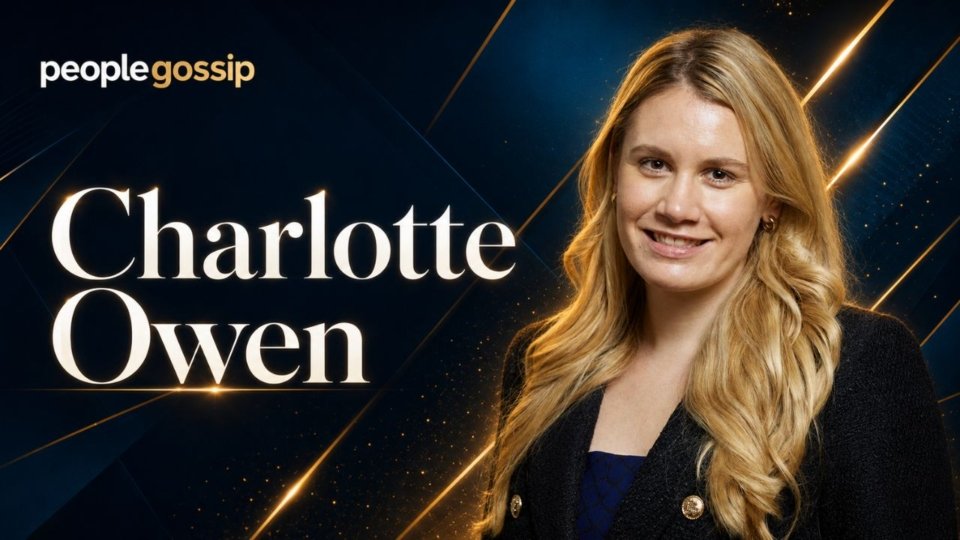
Charlotte Owen has made non-consensual image abuse a central part of her work in the House of Lords. Her proposals have focused particularly on deepfakes and other manipulated material created through generative AI without the subject’s consent.
Her original private member’s bill has not completed the parliamentary process. However, several ideas connected with her campaign have entered UK law through separate legislation. These include measures addressing requests for prohibited images, potential custodial penalties, image-generation tools and mechanisms for reporting abusive content.
Owen has developed this work with survivors, legal specialists, charities and support services. Her public statements place consent at the center of the issue: creating or requesting abusive material using a person’s image without permission can cause harm even before that content is shared.
From Government Adviser to the House of Lords
Before entering the House of Lords, Owen worked in government as a special adviser. A Cabinet Office record dated 30 June 2022 lists her as a pay-band-two adviser under Chief Whip Chris Heaton-Harris.
The official resignation-honors list published on 9 June 2023 described her as a former special adviser to Boris Johnson. She became a Conservative member of the House of Lords on 12 July 2023 and was formally introduced as Baroness Owen of Alderley Edge on 24 July.
In her maiden speech that November, Owen described the peerage as both an honor and a responsibility. She also argued that younger voices should be represented in parliamentary discussions, especially when decisions involve technology and artificial intelligence.
Her committee responsibilities later moved closer to those subjects. She joined the House of Lords Communications and Digital Committee on 30 January 2025. Her official parliamentary profile identifies online harms, technology and AI among her main areas of interest, alongside women’s health and young people.
Why Image-Based Abuse Became Her Legislative Focus
Owen has said that the growing scale and speed of non-consensual image abuse in 2023 and 2024 influenced her decision to pursue legislation. In an Inter-Parliamentary Union interview conducted in June 2026, she explained that generative AI had changed the nature of the problem.
A perpetrator no longer needs an authentic source image. An ordinary photograph can be altered to produce convincing abusive material without the person’s involvement or agreement. The resulting image may be fabricated, but the loss of control and potential damage to the subject are real.
During her first broadcast interview in September 2024, Owen described deepfake image abuse as disproportionately sexist. She argued that it deprives women of the ability to decide how their image is used.
Another concern involved the legal importance placed on a perpetrator’s motivation. In a December 2024 interview, she said that requiring a victim to establish intent could create gaps in the law and force that person to revisit a distressing experience. Her preferred approach placed greater weight on whether consent had been given.
That principle also shaped an essay she published the following day. Owen argued that abuse can begin when manipulated material is created or requested without permission, rather than only when someone distributes it.
Developing Proposals with Survivors and Specialists
The legislative campaign was not developed by Owen alone. Survivors, legal specialists, charities and helplines contributed their experiences and technical knowledge as the proposals took shape.
Those involved included specialist helplines, survivor-led groups and End Violence Against Women. Owen also worked with legal expert Clare McGlynn and other campaigners familiar with the weaknesses of existing protections. Reporting on the campaign described a WhatsApp group called “Heroes” that helped participants coordinate their work.
Survivor accounts provided practical context that legislation alone could not supply. They helped identify problems involving the creation of abusive material, requests made for such images and the difficulty of removing content once it had circulated online.
Owen has described the proposals as survivor-centered. When parts of the campaign initially met government resistance, she continued working with the group and pursued other parliamentary routes.
The proposals treated non-consensual AI-generated material as abuse even when it was produced from an ordinary photograph, placing consent at the center of the issue.
What Owen’s Private Member’s Bill Proposed
Owen introduced a private member’s image-abuse bill on 6 September 2024. The bill sought to address the creation and solicitation of certain forms of non-consensual image material, including content produced with AI.
Its second reading took place on 13 December 2024. The bill then progressed through its remaining House of Lords stages and received a third reading on 7 February 2025.
The proposal aimed to close the distance between older image-abuse laws and newer forms of synthetic content. Its approach recognized that a person can be targeted even when no genuine source photograph exists. It also treated a request for abusive material as a relevant part of the process rather than focusing exclusively on the person who ultimately creates or distributes it.
Progress through the Lords did not make the bill law. On the parliamentary page updated on 5 May 2026, no date had been set for its first reading in the House of Commons. Its status therefore remained separate from provisions that later entered law through government legislation.
That distinction is important to the chronology. Owen’s private member’s bill established a detailed parliamentary proposal, while related measures advanced through other bills moving through Parliament.
How Parts of the Campaign Entered Law
Some principles promoted through Owen’s amendments were incorporated into the Data (Use and Access) Act 2025. House of Commons Library analysis identified two notable elements: the possibility of a custodial sentence and an offense covering requests to create the specific category of non-consensual imagery defined by the legislation.
The Act received Royal Assent on 19 June 2025. The relevant provisions came into force on 6 February 2026 under the government’s commencement schedule.
These changes addressed parts of the conduct Owen had discussed publicly. The requesting provision covers situations in which one person asks for prohibited non-consensual imagery to be produced, extending the legal response beyond the person who creates it.
The enacted measures were connected with her campaign, but they were not the full passage of her original bill. They became law through the Data (Use and Access) Act, with its own parliamentary route and wider legislative purpose.
Further Changes Through the Crime and Policing Act
Owen continued pursuing additional measures during consideration of the Crime and Policing Bill. On 2 March 2026, she moved amendment 276, which concerned a reporting or registration mechanism for prohibited non-consensual images. The House of Lords agreed to the amendment.
A separate amendment addressing deletion orders passed by 202 votes to 155 on the same day. Deletion measures were intended to improve the response after abusive material had been created or circulated, when preventing the original offense was no longer possible.
The final Crime and Policing Act 2026 contains provisions covering tools used to generate the category of non-consensual images defined by the Act, as well as related reporting or registration arrangements. The generator provisions respond directly to the ability of digital tools to create abusive images of identifiable people.
The Lords-stage amendments addressed several parts of the problem, including creation, reporting and the possible deletion of abusive material. The final Act specifically confirms the image-generator and reporting provisions.
The work also broadened the discussion beyond punishment alone. Victims may need a practical way to report an image, establish that it is non-consensual and seek its removal from services where it appears.
A Wider Approach to AI Accountability
Although Owen has warned about AI-enabled image abuse, she has not argued that the United Kingdom should withdraw from AI development. In a House of Lords speech on 5 June 2026, she said the technology could help cure disease, accelerate scientific work and transform the economy.
Her concern is that innovation can develop alongside deception, manipulation and image-based abuse. She linked the misuse of deepfake tools to misogyny and argued that technological systems can reproduce the values of the people and organizations responsible for training them.
Owen also questioned whether decisions about AI’s moral boundaries should be left to a small group in Silicon Valley. Her position combines continued technological development with legal safeguards and clearer responsibility for developers and online platforms.
Platform accountability is especially relevant once abusive images cross national borders. In an Inter-Parliamentary Union interview conducted on 3 June 2026 and published on 20 July 2026, she called for international cooperation rather than relying entirely on domestic offenses. Content can be generated in one country, hosted in another and viewed almost anywhere, limiting what a single legal system can achieve.
Her wider parliamentary work has followed a similar direction. In May 2026, she called for quicker action on technology-facilitated violence against women and girls, online safety and women’s participation in science, technology, engineering and mathematics.
Where Charlotte Owen’s Campaign Now Stands
As of the parliamentary record updated on 5 May 2026, Charlotte Owen’s original private member’s bill had completed its House of Lords stages but had not completed the Commons process. It therefore remained distinct from the laws already enacted.
At the same time, measures connected with the campaign had advanced through two separate statutes. The Data (Use and Access) Act 2025 addressed requests for prohibited non-consensual images and related penalties, while the Crime and Policing Act 2026 included provisions involving image-generation tools and reporting arrangements.
In the verified 2026 statements reviewed, Owen continued to focus on consent, support for survivors, platform responsibility and cooperation between countries. The legal response has developed across several parliamentary routes, shaped by both technological change and first-hand evidence from people affected by image-based abuse.