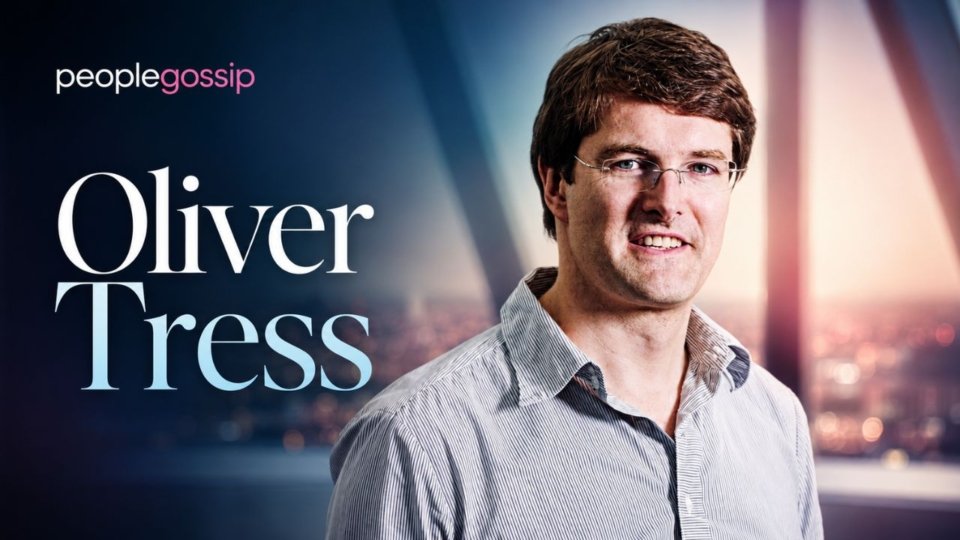
Oliver Tress founded Oliver Bonas in 1993, opening a single London shop after testing demand for products he had brought back from Hong Kong. What began as a small university trading activity developed into a retailer with more than 90 stores across the United Kingdom and Ireland.
The expansion did not follow a simple or effortless path. Tress has spoken directly about the strain of moving beyond the first store, the need to delegate responsibility and the leadership lessons he learned as the company grew. His role also changed with the business. He began by personally finding and choosing products, but Oliver Bonas gradually developed its own design teams and a much larger own-brand range.
Companies House records identify Oliver James Mark Tress as an active director and controlling shareholder of Oliver Bonas Limited. Recent company documents use the title founder and managing director, connecting him formally to the business more than three decades after its first store opened.
How the Business Began During His University Years
Tress has said that the earliest version of the business took shape while he was studying anthropology at Durham University. At the time, his parents were living in Hong Kong, and he began bringing handbags, watches and other products back to Britain.
He initially offered the products to friends. Interest spread beyond his immediate circle, and he moved into selling them at markets and fairs. The activity gave him a practical way to test what people were willing to buy before he committed to opening a permanent shop.
In a 2023 interview with Skills Builder Partnership, Tress explained that he wanted to pursue something independently rather than follow the conventional graduate career routes he saw around him. The verified information identifies anthropology as his field of study, while his early retail experience developed through direct contact with products and customers.
His anthropology studies also remained relevant to the way he later described his work. In a 2017 interview, he connected the subject with an interest in people, behavior, and the relationships individuals form with objects and their surroundings. Tress directly identified anthropology at Durham as his field of study, although the available sources do not confirm his attendance dates or degree details.
Opening the First Oliver Bonas Store
The first Oliver Bonas shop opened in London in 1993. The company’s official history describes the early range as being influenced by objects and designs Tress encountered while traveling.
Older interviews identify Fulham Road as the first location, although the current company history confirms only London and the opening year. The shop turned his informal trading activity into a permanent retail operation, but it still carried the character of the earlier business. Tress was closely involved in finding products, deciding what to stock and judging what might appeal to customers.
He later recalled that the shop took about £1,000 on its opening Saturday. The figure comes from his own retrospective account rather than a published financial record, but it captures the early response that encouraged him to continue.
The original concept was based heavily on selection. Tress brought together clothing, accessories, homeware and other objects that he considered distinctive enough to attract interest. At this stage, Oliver Bonas was not yet the design-led, own-brand operation it would become. Its identity depended largely on his individual eye for products and the mixture he assembled inside the store.
Expanding Beyond a Single Shop
The first shop demonstrated demand, but reproducing that result elsewhere proved difficult. Tress has described the move from one location to two as one of the most painful periods in the company’s development.
In his Jazz Shapers interview, he said the company’s early years brought significant pressure and uncertainty.
He has acknowledged that the strain became significant and that he considered other possibilities during difficult periods. His comments describe professional stress rather than a smooth rise from one successful opening to a national chain.
Oliver Bonas nevertheless continued to expand. Store numbers published in older interviews vary because they refer to different stages of the company’s growth. Earlier sources recorded totals such as more than 40, 73 or 84 locations. A 2024 company report recorded 90 stores, while the current Oliver Bonas website describes the network as having more than 90 stores across the UK and Ireland.
The same 2024 report recorded more than 1,650 permanent team members. Those figures belong to that reporting period rather than serving as exact current totals, but they indicate how far the business had moved beyond its founder-led beginnings.
From Product Selection to In-House Design
As the company became larger, the way it created and sourced products changed. Tress initially built Oliver Bonas around objects he personally found and selected. Growth made that approach increasingly difficult to sustain.
He has explained that the company gradually developed internal product and design teams. Rather than relying mainly on external products chosen by one person, Oliver Bonas began creating more of its own merchandise. According to the company’s 2024 report, approximately 89 percent of its range was own-brand during that period.
The transition also changed the visual identity of the business. Tress said he came to appreciate that Oliver Bonas no longer represented only his preferences. Designers, buyers and other creative employees contributed ideas that broadened the company beyond the taste of its founder.
No single date marks the point when internal design became dominant. It was a gradual professional change, linked to the growth of the company and its workforce. Tress moved from being the main person choosing products to leading an organization capable of developing collections through collaborative teams.
That approach remained visible in later partnerships. In September 2025, Oliver Bonas introduced a homeware collaboration with Shrimps. Tress said the company had admired the brand and that its team enjoyed working with Shrimps founder Hannah Weiland. His statement connected him publicly to the collaboration without suggesting that he personally designed its individual products.
Learning to Delegate and Lead More Clearly
The development of Oliver Bonas required Tress to reconsider how much control he could retain. He has described himself as a generalist rather than a specialist, acknowledging that some areas of the business were better handled by people with deeper expertise.
Finance, he said, was not his strongest field, although he understood the underlying numbers. He viewed visual judgment, ambition and the willingness to act without having every answer as more central to his early contribution.
As Oliver Bonas expanded, hiring capable people helped him accept that he did not need to be the best person in every role. In a City A.M. interview, he described letting go of some responsibilities as necessary and personally freeing. Delegation allowed others to shape areas of the company that had previously depended heavily on him.
Communication became another important lesson. Tress told Skills Builder Partnership that he had once expected colleagues to understand what he wanted without always explaining it clearly. He eventually recognized that employees could not read his mind and needed direct expectations, proper support, and room to carry out their responsibilities.
He has also said that he often internalized business pressure rather than making it visible to those around him. He used the term introverted in that limited professional context. His comments concerned how he responded to stress during the company’s development, not a complete description of his private personality.
The Ideas That Continue to Shape Oliver Bonas
Tress has said that the ongoing challenge of keeping products fresh and relevant remains one of the parts of retail he finds most engaging. He enjoys the process of beginning without a fixed answer and moving from an undeveloped idea to a finished product.
That preference fits the company’s shift toward internal design. The move toward internal design allowed a wider creative team to contribute to product development and the company’s visual identity. Tress has spoken positively about the open possibilities involved in that work.
He has also questioned the wider purpose of selling non-essential products. In a 2019 interview with The Irish Times, he described experiencing an existential moment about a business focused on items such as clothing and candles.
His response was to place more emphasis on the experience surrounding the products. He said Oliver Bonas should offer customers joy and optimism rather than treating retail as a purely transactional activity. That was his stated view of the brand’s purpose, not a measurable claim about every customer experience.
The same interview showed a cautious approach to international growth. When Oliver Bonas opened in Dublin, Tress described Ireland as a pragmatic first step outside the company’s main UK base. The market involved fewer cultural and operational complications than a more distant international move, allowing the company to expand gradually rather than pursuing rapid overseas growth.
Professional Standards and Public Partnerships
As founder and managing director, Tress has formally approved company policies addressing labor conditions and supply-chain risks. He signed the Oliver Bonas Supplier Code of Conduct dated March 2023.
The code outlines expectations concerning wages, employment practices, discrimination, child labor, forced labor and workplace safety. It records the standards the company asks suppliers to follow, although it does not function as independent proof that every supplier meets every requirement at all times.
Tress also signed the company’s Modern Slavery and Human Rights Risks Report covering January through December 2024. The report was signed in July 2025 and updated in December 2025. It describes supplier monitoring, employee training, governance procedures and attempts to identify forced-labor and human-rights risks.
Oliver Bonas has also participated in education and youth-development partnerships. Skills Builder Partnership reported that the company supported five schools and used its skills framework within the business. The arrangement was confirmed in 2023, although the available information does not establish whether the same five-school program continued unchanged into 2026.
For 2019–2020, UK Youth selected Oliver Bonas as a charity partner. Tress said he wanted the relationship to involve more than fundraising and awareness. He discussed providing experiences that could help young people develop practical life skills. The initiative was a company partnership for a defined period rather than evidence of a continuing personal charity program.
Oliver Tress and the Continuing Growth of Oliver Bonas
Oliver Tress remains formally connected to the company he started in 1993. Companies House records show that he became a director of Oliver Bonas Limited on August 12, 1999, and continued to hold an active directorship when the records were checked in July 2026.
The same institutional records identify him as a person with significant control, holding more than 50 percent but less than 75 percent of the company’s shares. The records establish substantial ownership but do not provide a reliable basis for estimating his personal wealth or the present value of that stake.
Oliver Bonas Limited filed a confirmation statement on June 23, 2026, with a statement date of June 22. Its latest recorded accounts covered the financial year ending December 31, 2024, and were filed in September 2025.
Tress’s role developed alongside the company. The individual product selection that defined its earliest stage gradually gave way to internal design teams, specialist management and formal supply-chain responsibilities. More than three decades after the first London store opened, he remains an active director and controlling shareholder of a retailer operating more than 90 stores across the UK and Ireland.