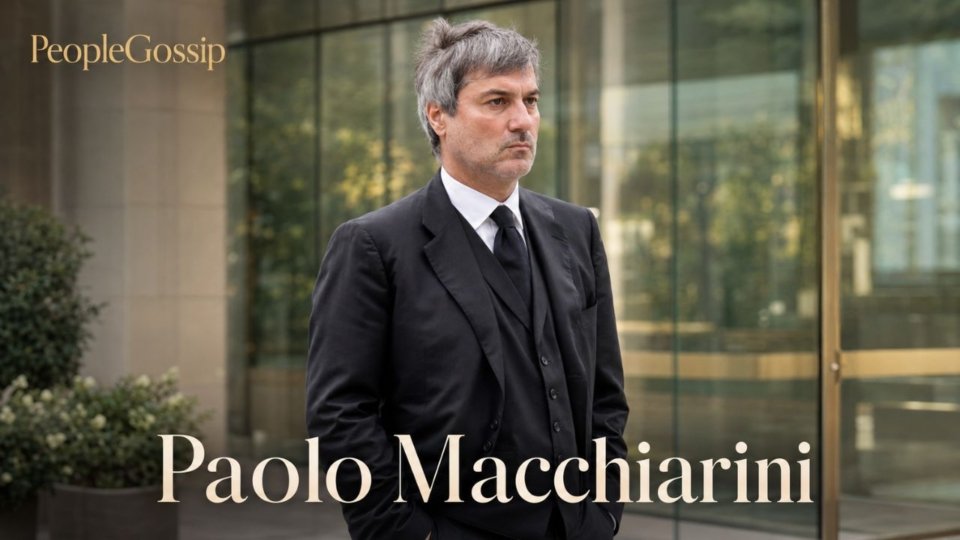
Paolo Macchiarini entered Karolinska Institutet with an international surgical background and ambitious ideas about regenerative medicine. He later became the central figure in one of the institution’s most serious medical and research controversies.
Between 2011 and 2012, Macchiarini implanted synthetic tracheas in three patients at Karolinska University Hospital. All three patients later died. Scientific investigations uncovered misleading research descriptions and serious ethical problems, while a Swedish appeals court eventually convicted him of three counts of gross assault.
The Paolo Macchiarini case was not limited to the conduct of one surgeon. Independent reviews also criticized Karolinska’s recruitment, supervision and response to warnings, leading the institute and hospital to change how they oversee clinical research and unproven treatments.
From Medical Training to an International Career
Macchiarini was born in Basel, Switzerland, on 22 August 1958, according to the employment application he submitted to Karolinska. The University of Pisa confirmed that he earned his medical qualification there and completed a surgical specialization. His résumé placed his medical studies between 1980 and 1986.
His professional life later took him through several countries. In a 2012 profile, Macchiarini described international movement as important to his creativity. He believed that remaining in one place could limit professional development and said dissatisfaction with patronage in Italian academic life influenced his decision to leave.
Not every credential presented in his résumé received the same institutional confirmation. The University of Alabama at Birmingham disputed his claims of earning a master’s degree in biostatistics and completing a two-year thoracic-surgery fellowship there. Its records instead showed a six-month, non-surgical fellowship in hematology and oncology.
Hannover Medical School also clarified that he had been an adjunct professor rather than a full or associate professor. These discrepancies later became directly relevant to Karolinska’s assessment of how he had been recruited and evaluated.
Recruitment by Karolinska
In autumn 2010, Karolinska Institutet recruited Macchiarini as a visiting professor working in regenerative medicine and stem-cell biology. At the same time, Karolinska University Hospital employed him part-time as a consultant and surgeon.
The two appointments were connected but institutionally separate. KI was responsible for his academic research position, while the hospital employed him for clinical work involving patients. That division later complicated questions about who approved, supervised and monitored his activities.
Macchiarini arrived with an international reputation and plans to develop replacement tracheas using regenerative techniques. The appointments gave him access to both a major medical university and its associated hospital. Later investigations found that the institutions had not examined his background or supervised his work with the necessary care.
The Synthetic Trachea Operations
Between 2011 and 2012, Macchiarini performed three operations in which patients’ damaged tracheas were removed and replaced with synthetic structures. The implants were designed to be combined with stem cells in the hope that functioning tissue would develop around them.
The procedures were presented at the time as clinical interventions for seriously ill patients. They also involved an unproven technique with limited supporting evidence. Subsequent independent inquiries concluded that the operations constituted research rather than healthcare and criticized the ethical review and institutional oversight surrounding them.
All three patients experienced serious complications, and Karolinska University Hospital confirms that each of them later died. Their deaths occurred at different times after the operations. The later criminal judgment did not convict Macchiarini of homicide or legally establish that he had killed the patients. His conviction concerned the physical injuries and suffering caused by the procedures.
By 2013, the hospital had stopped further synthetic-trachea operations and decided not to extend his surgical contract. Macchiarini nevertheless remained connected to KI as a researcher for several more years.
Growing Concerns About the Research
Formal concerns began reaching KI in 2014. A Belgian researcher submitted an allegation of scientific misconduct, followed by separate complaints from doctors and researchers connected with Karolinska University Hospital.
The doctors argued that published papers described the patients’ conditions and the performance of the implants too positively. Some of the complainants had participated in the research and appeared as co-authors on papers under examination.
The dispute went beyond differences in scientific interpretation. Investigators later identified serious inaccuracies in descriptions of the patients before and after surgery. They also found that the publications did not adequately justify treating the procedures as last-resort interventions.
Other concerns involved missing references to relevant animal experiments, inadequate ethical approvals and problems with informed consent. The available evidence led investigators to conclude that the clinical work had been presented in a way that concealed important weaknesses and risks.
KI initially declined to find Macchiarini guilty of misconduct in 2015, although it concluded that he had acted without sufficient care. The institution reopened the matter in 2016 as additional evidence, reporting and criticism placed its earlier decision under greater scrutiny.
Dismissal and Research Misconduct Findings
On 23 March 2016, Karolinska Institutet dismissed Paolo Macchiarini from his research position. KI cited several reasons, including his work outside the institution, failure to report those activities fully and truthfully, misleading information in his résumé and scientific negligence.
The research record underwent further examination after his departure. In June 2018, KI found seven researchers responsible for scientific misconduct involving six papers about synthetic-trachea research. Macchiarini was one of the main authors and was considered ultimately responsible for several of the identified inaccuracies.
The findings described fabricated or distorted accounts of patient conditions, insufficient justification for the operations and missing information about ethical approval, consent and supporting experiments. KI asked the relevant journals to retract the six papers.
Responsibility did not rest exclusively with Macchiarini. Other authors were also found responsible or blameworthy, although investigators distinguished between their different levels of involvement. Some of the doctors who had raised concerns were praised for reporting the problems while still being assessed for their own contributions to the publications.
The correction of the scientific record continued long after the 2018 decision. Further Swedish research-integrity findings were issued in 2023. Two papers were retracted in October of that year, followed by another retraction in January 2024.
How Macchiarini Defended His Decisions
Macchiarini repeatedly rejected accusations that he had knowingly harmed patients. In a Swedish television interview in May 2016, he said the operations had involved decisions by multidisciplinary teams rather than a single surgeon acting alone.
He defended the use of an experimental procedure by pointing to the limited options available to a terminally ill patient. His position was that attempting an unproven intervention could be preferable to leaving a young patient without a possible treatment. He acknowledged that doctors are human and can fail or make mistakes, but maintained that he believed the clinical indication was correct at the time.
Macchiarini also disputed attempts to evaluate every patient outcome in the same way. He argued that the causes of death had to be examined individually and resisted the idea that the technology could be judged through a simple statement that it either worked or failed.
In a separate written response later in 2016, he said synthetic scaffolds were supported by many years of research and accused critical coverage of misrepresenting him. These statements document his defense, but subsequent institutional findings identified serious weaknesses in the evidence and ethical presentation of his work.
The Swedish Criminal Case
The criminal proceedings produced different results at two judicial levels. In June 2022, a Swedish district court convicted Macchiarini of causing bodily harm in one case, acquitted him on two other charges and imposed a suspended sentence.
The Svea Court of Appeal reached a substantially different judgment on 21 June 2023. It convicted him of three counts of gross assault and sentenced him to two years and six months in prison.
The appeals court found that removing the patients’ tracheas and replacing them with synthetic implants had caused physical injuries and serious suffering. It agreed that the operations had not been performed according to established science and proven medical experience.
For the first two patients, the court rejected the argument that the procedures had been carried out during an emergency. It accepted that an emergency existed in the third case but ruled that the operation remained indefensible.
The judges did not dispute that Macchiarini hoped his method would succeed. They nevertheless found criminal intent because he understood the risk of injury and suffering and was indifferent to whether those risks became reality.
After the judgment, Macchiarini continued to deny wrongdoing. He said he had trusted senior figures who approved the work and described the effect the accusations had on his children. Sweden’s Supreme Court declined to hear his appeal on 30 October 2023, leaving the prison sentence in force.
Karolinska’s Institutional Responsibility
The final criminal judgment addressed Macchiarini’s legal responsibility, but the wider case exposed serious failures within Karolinska. Independent investigations criticized how he had been recruited, how his qualifications were checked and how his clinical and research activities were supervised.
Warnings from researchers were not handled effectively at first. KI’s original 2015 decision cleared him of scientific misconduct despite an external investigation identifying major problems. The institution reversed its position after the case was reopened.
Karolinska University Hospital later acknowledged the consequences for patients and their families and issued an apology. It also introduced changes intended to clarify responsibility for patient care and ensure that clinical research follows ethical and regulatory requirements.
Additional measures included a whistleblower function, stronger research governance and a council for evaluating unproven treatments. These reforms were designed to reduce uncertainty about who has authority over experimental procedures and how concerns should be escalated.
Where Paolo Macchiarini Was Last Reliably Reported
Because Macchiarini had lived in Spain, arrangements were made for him to serve the Swedish sentence there. Reputable reporting states that he entered a Catalan prison in September 2024 after Spanish authorities accepted the transfer.
The latest reliable location report, published in April 2025, placed him at Quatre Camins prison in La Roca del Vallès, Catalonia. No authoritative public information establishes his precise location or custodial status in July 2026. Public accounts of his behavior inside prison relied on unnamed sources and were not independently confirmed.
The Lasting Meaning of the Macchiarini Case
The Paolo Macchiarini case brought together experimental medicine, research integrity, patient safety and institutional accountability. His work proceeded within prominent medical organizations, yet later investigations found weaknesses in the underlying evidence, ethical safeguards and published descriptions of patient outcomes.
Macchiarini was ultimately dismissed, found responsible for scientific misconduct and convicted of three gross assaults. Karolinska also faced substantial criticism for failing to verify credentials carefully, supervise the work effectively and respond properly when concerns were raised.
The case changed Karolinska by forcing reforms in clinical-research governance, whistleblowing and the assessment of unproven treatments. Its lasting lesson is that medical ambition cannot replace evidence, informed consent, independent oversight and clear responsibility for patient protection.