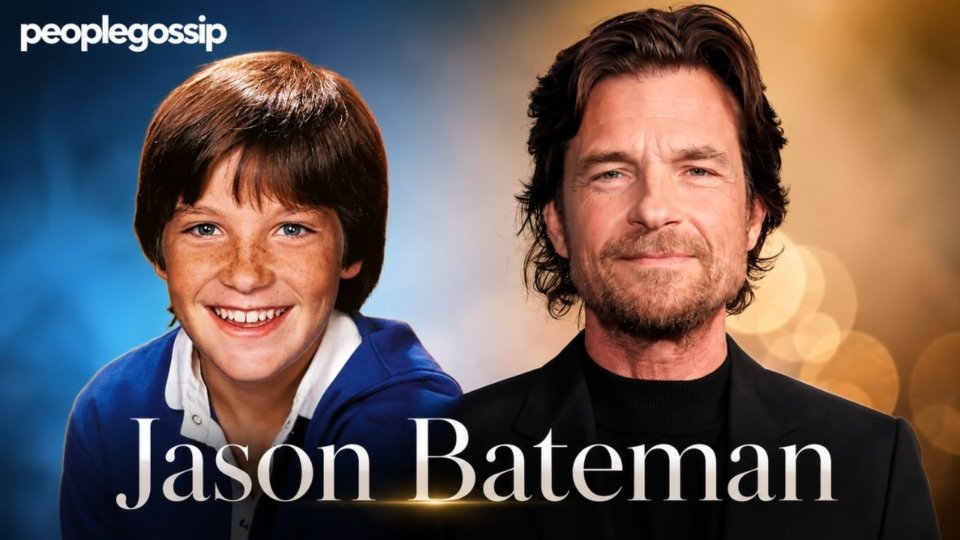
Jason Bateman began professional acting at around ten years old, entering a demanding workplace long before adulthood. His early income also became important to his household, which meant that acting carried responsibilities beyond learning lines and appearing on camera.
Directing, however, was already part of his long-term plan. Bateman has said that becoming a director was one of the goals he formed during childhood. He understood that reaching it would require patience, professional credibility and enough influence to be trusted with greater creative responsibility.
His later career developed across acting, directing and executive production. Official institutional records document major recognition in each area, while his interviews explain how early work, personal change and years of experience helped him move more confidently behind the camera.
A Professional Start During Childhood
Bateman has said that he began professional acting at approximately ten years old. Some reputable accounts connect age eleven with his first prominent recurring role, but the two versions refer to different stages: beginning paid professional work and receiving a larger television opportunity. The available accounts therefore place the beginning of his professional work at around ten, with the prominent recurring role following at eleven.
He entered an adult working environment while still developing his own identity. In later interviews, Bateman explained that his earnings became significant to his family’s finances. Acting was therefore not simply an after-school interest. It was structured employment carrying expectations that would normally fall on an adult.
He has spoken about the benefits and difficulties of that experience without presenting childhood acting as entirely positive or entirely harmful. Working early helped him become adaptable and comfortable around professional crews, schedules and changing demands. At the same time, he has acknowledged that young performers face rejection, financial uncertainty and pressure before they have fully developed the emotional tools to handle them.
Those experiences continue to shape his view of children entering the profession. Bateman has advised caution, particularly when adults begin depending on a child’s earnings or when professional approval becomes closely connected to the child’s sense of identity.
Early Ambitions Beyond Performing
Although acting introduced Bateman to professional production, he did not see performance as his only long-term objective. He has said that directing a feature was one of the goals he identified when he was young, alongside becoming a husband and father.
The ambition remained present even when he lacked the authority to pursue it fully. Bateman understood that directing opportunities were rarely given simply because an actor wanted them. He believed he first needed to establish enough professional value for studios and producers to trust him with decisions affecting an entire production.
Bateman did not describe directing as an abrupt reinvention. He said it was a childhood goal, although he believed he first needed enough professional standing to receive directing opportunities.
This gradual approach also explains why he continued acting while seeking broader responsibilities. Performance remained a central part of his work, but it increasingly became connected with directing and production rather than existing as his only creative contribution.
Career Renewal Created New Opportunities
Bateman’s career did not progress in a perfectly straight line. He has described his twenties as a period of personal uncertainty and professional frustration. During that time, he dealt with self-doubt, sought therapy and advice, and questioned how to create greater stability.
A later return to prominent television work changed the range of opportunities available to him. His performance earned a Golden Globe in 2005, providing official recognition at a point when his adult career was gaining renewed momentum.
Bateman has connected that period of success with his ability to pursue directing more seriously. He did not suggest that one role automatically created every later opportunity, but stronger professional standing made it easier for decision-makers to consider him for work behind the camera.
The shift was important because directing had remained an objective through less secure periods. Once his acting career regained momentum, he was in a better position to use that credibility rather than treating renewed success only as a reason to accept more acting roles.
Recognition did not create Bateman’s interest in directing. According to his own account, renewed career momentum made it easier for him to pursue an ambition he had already held for years.
Establishing Himself as a Director
Bateman eventually made directing a substantial part of his television career. He has said that the opportunity to work behind the camera was the main reason he accepted a later dramatic television commitment.
That decision allowed him to combine acting, directing and executive production on the same project.
The Television Academy formally recognized this work when he won the 2019 Emmy for Outstanding Directing for a Drama Series. The award was presented on September 22, 2019. When discussing it later, Bateman emphasized the crew’s contribution rather than treating the result as an individual achievement.
The Emmy established institutional confirmation that his work behind the camera had developed into more than an occasional extension of acting. Directing had become one of the central disciplines through which his career was being evaluated.
Balancing Acting and Work Behind the Camera
Working simultaneously as an actor and director creates a practical problem: the person guiding the full production must also step into a scene and perform within it. Bateman has discussed how he manages that transition through preparation and small physical cues.
During one recent production, he used a slight adjustment in his jaw position to help move from directing concentration into the physical behavior of his character. He presented it as a production-specific cue that helped him separate the two roles during the working day.
Bateman has also said that he often begins with recognizable parts of his own reactions and temperament, then adjusts those qualities to fit the character. He views that process as more natural than forcing behavior that feels disconnected from his own instincts.
He is frequently drawn to characters who occupy a comparatively grounded position while disorder develops around them. In both comedy and drama, he has explained that he enjoys observing extreme behavior and reacting to it rather than always generating the most outwardly dramatic action himself.
In interviews, Bateman described this as an acting preference rather than a general directing method. He did not present the characters as autobiographical, but said his performances often begin with controlled versions of his own reactions.
Expanding His Creative Responsibilities
Bateman’s recent professional work has continued to combine acting, directing, and executive production. Official records from the Television Academy show that his recognition now extends across all three responsibilities rather than remaining limited to performance.
As of July 21, 2026, the Academy listed 18 Emmy nominations and one win connected with his work. That total included recognition for acting, directing and executive producing, although the number may change in later award cycles.
In the 2026 Emmy cycle, Bateman received four nominations across two limited productions. He was nominated for a lead performance and for directing on one project. On another, he received recognition for supporting acting and for his work as an executive producer.
These were nominations rather than completed wins at the research cutoff. Their significance lies in the range of professional roles being recognized during the same awards cycle. Bateman was no longer being assessed only for what he contributed in front of the camera.
One recent production also placed him in the roles of performer, executive producer, and director of its opening episodes. Such overlapping duties represent the outcome of the transition he had planned since childhood: not leaving acting behind, but gaining greater influence over how the entire production was shaped.
Personal Change and Professional Stability
Bateman has linked his professional development with changes in his personal life. He described his twenties as unsettled, including periods of partying, self-doubt and attempts to find useful guidance. His account was reflective rather than diagnostic, and he has not presented it as a complete medical or psychological history.
He identified his early thirties as a turning point. During that period, he said he stopped drinking, married his girlfriend, and secured the work that helped renew his adult career. His account concerned stopping alcohol use rather than complete abstinence from every intoxicating substance.
Marriage and fatherhood were not goals he developed only after becoming professionally stable. Bateman has said both were important to him from childhood. He described friendship and long-term compatibility as central to his approach to marriage, rather than relying only on romantic excitement.
He has also connected personal stability with responsibility. In interviews, Bateman said he does not want to become a burden to his wife and two daughters. He views clarity and emotional balance as conditions requiring regular attention rather than achievements that remain secure without effort.
His experience as a child actor has affected how he evaluates his daughters’ creative interests. He has discussed considering whether they can cope with rejection, pressure, and the instability of professional production. The focus of those comments was not on predicting their careers, but on whether they possess the emotional preparation required for the environment.
A Career Built Toward Directing
Bateman’s verified career record describes a gradual expansion of responsibility rather than a complete departure from acting. The directing ambition he formed in childhood became more achievable after his adult career regained momentum, and later institutional recognition covered acting, directing, and executive production. His recent work continues to combine performance with creative responsibilities behind the camera.