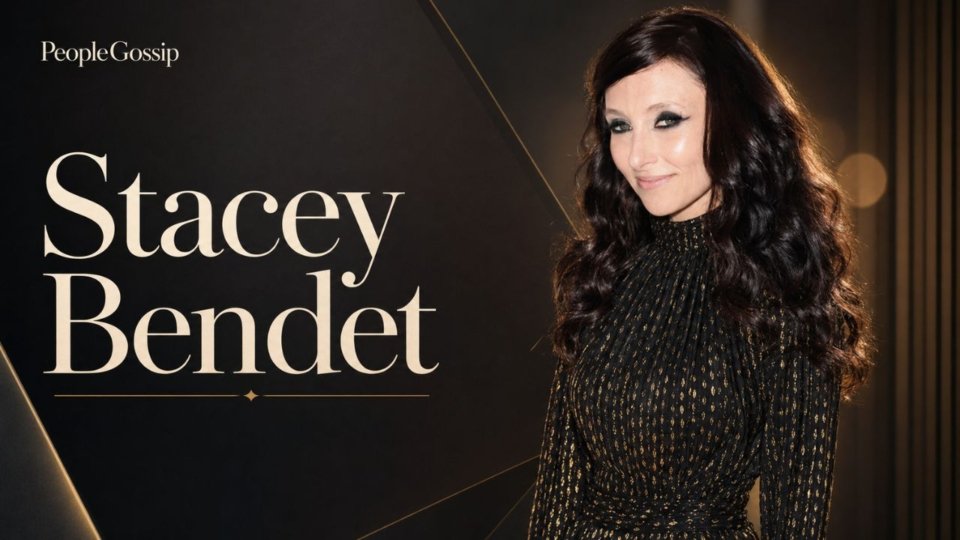
Stacey Bendet built Alice + Olivia from a focused clothing idea into a wider fashion business shaped by creativity, customer experience, and public purpose. The company began with trousers, but its development was not limited to adding more products. Bendet also developed a clear view of how women should feel when entering a store, when wearing the brand, or when engaging with its public work.
Her career did not begin with formal fashion-school training. She studied international relations, took business courses, and worked on websites before identifying an opportunity in the clothing industry. Since launching Alice + Olivia in 2002, she has remained its CEO and creative director while taking on leadership roles with the Council of Fashion Designers of America and other organizations. More recently, she has introduced artificial intelligence into parts of the company’s creative and operational work while arguing that human taste and judgment must remain central.
The Market Gap That Started Alice + Olivia
Before entering fashion as a designer, Bendet worked on websites, including projects connected with an apparel company. That position gave her a view of the clothing market at a time when denim and conventional work trousers dominated many wardrobes. She believed there was room for pants that could serve as the main feature of an outfit rather than simply supporting another piece.
Bendet began developing striped trousers around that idea. She was not working from a formal fashion education, so the early stages involved learning about fabric, production, and construction while working with people with technical expertise. The concept grew into a 20-piece collection presented at New York’s Russian Tea Room in 2002.
The earliest part of the company’s history requires a small but important clarification. Current profiles on Alice + Olivia and CFDA identify Stacey Bendet as the founder. Reliable earlier accounts, however, identify her University of Pennsylvania classmate Rebecca Matchett as an original partner or co-founder. Those accounts report that Matchett left the business after its early period. The most accurate summary is that Bendet launched the company in 2002, with Matchett involved in its founding.
Theory founder Andrew Rosen invested in the young business within months of its launch. He then became Bendet’s long-term partner, bringing experience in fashion operations while she remained closely associated with the company’s creative identity.
Building a Wider Brand From One Product Idea
Alice + Olivia did not begin with a detailed plan to become a complete lifestyle label. Its growth followed the response to its initial pants. Customers and retailers wanted tops to wear with them, prompting the business to expand into sweaters and other separates. Dresses, gowns, footwear, handbags and accessories followed as the company addressed additional parts of its customers’ wardrobes.
Bendet has described this expansion as a conscious process rather than a sudden attempt to enter every category. New products emerged when she noticed a gap or heard a practical request from stores. Motherhood also influenced product development. She explained that some of her existing clothes were not practical for time spent in a park, which led to the creation of comfortable pieces that traveled well without losing the brand’s identity.
As the company became larger, its internal structure needed to change. Bendet recalled Andrew Rosen telling her that she was managing a substantial business as though it were still much smaller. Instead of continuing to expand immediately, she temporarily shifted attention toward building a stronger management system.
That decision required her to spend more time on procedures and leadership, even though she preferred choosing fabrics and developing designs. The pause allowed Alice + Olivia to establish an organization capable of supporting broader operations. Historical publications contain various revenue, staffing, and store figures, but those numbers are dated and do not establish the company’s current financial size.
How Personal Experience Shaped the Brand
Bendet grew up in Chappaqua, New York, around her father’s textile-importing business. She recalled using leftover fabric to create clothes when she was young and later sketching a dress for her bat mitzvah. That early contact with materials gave her practical familiarity with textiles before fashion became her profession.
At the University of Pennsylvania, she studied international relations and graduated in 1999. She also took courses at Wharton, progressing from introductory finance to entrepreneurial management. Her education therefore combined a broad academic subject with exposure to business planning, even though it did not provide formal training in clothing design.
A semester in Paris influenced a different part of her thinking. Bendet has said that she entered a luxury store excited to make a purchase but felt dismissed by the salesperson. The experience stayed with her because it made an aspirational environment feel unwelcoming.
She later connected that memory to the way she wanted customers to be treated in her own stores. Her preferred approach was to make women feel comfortable and respected rather than suggesting they were inadequate and needed to buy something to improve themselves. That customer philosophy became closely connected with Alice + Olivia’s wider emphasis on confidence and individual expression.
Creativity, Leadership and Professional Growth
Bendet initially designed around her own preferences, but the collection expanded to serve women with different routines and styles. She has described using several customer types when thinking about a collection, while maintaining a consistent boundary around what belongs within the Alice + Olivia identity.
Her management approach also became more collaborative. In a 2023 interview, Bendet said one of her most valuable leadership lessons was to hire people who were better than she was at their specialties. Strong employees could manage work outside her core strengths, leaving her more space to focus on creative direction.
A professional organization plays a large role in her routine. Bendet has described her schedule as highly structured and said she makes lists for design work, business responsibilities, and family commitments. She has also practiced Ashtanga yoga since her college years, adopting a more consistent routine after meeting her teacher, Eddie Stern, in 2004. The repetition and concentration involved in the practice, she said, help her stay balanced during demanding periods.
Bendet has not described business growth as effortless. She acknowledged that she sometimes approaches change with anxiety, yet she also finds that learning something unfamiliar can increase her creativity. Resilience and a willingness to adapt have been central to her explanation of the company’s ability to manage difficult periods.
Her communication style is direct by her own account. She has said that she encourages good work but does not like disguising problems when something falls short. That combination of delegation, structure, and candid feedback developed alongside the company rather than being fixed from its beginning.
Purpose Beyond Clothing
Bendet’s stated purpose for Alice + Olivia extends beyond producing attractive garments. She has described fashion as a form of personal expression and said the brand should help women feel confident in their own choices. After becoming a mother, she began thinking more carefully about how her public work would appear to her three daughters and how the company’s platform could support constructive causes.
Equal pay became one of the issues she addressed directly. In a 2018 interview, Bendet said men and women doing equivalent work should not receive different compensation. She connected that position with her hope that her daughters would enter a professional environment without a gender-based divide.
She has also supported flexibility for working parents. Bendet has spoken in favor of shared parental responsibility and leave arrangements that allow families to divide work and caregiving according to their circumstances. These comments reflect her personal position, although they do not provide a complete record of all current Alice + Olivia employment policies.
The company’s Communi-T initiative used limited-edition clothing to raise attention and funds for selected causes. A 2017 equal-pay campaign directed 10 percent of proceeds from designated shirts to the Global Fund for Women. Bendet also serves on the board of the GOOD+ Foundation, which assists families through material support and related programs.
In 2020, she joined Bozoma Saint John, Luvvie Ajayi Jones and Glennon Doyle in creating #ShareTheMicNow. The campaign paired Black women with white women who temporarily transferred control of large Instagram accounts, giving the invited participants direct space to share their work and perspectives.
Bendet helped launch Creatively during the same year as a professional network and employment platform for people in creative fields. The platform’s original purpose and launch are documented, although its operating status in 2026 is not clearly established.
She and Andrew Rosen later launched Big Feelings in November 2023. The sleepwear and loungewear project was built around emotional expression, community, and mental health awareness, with Project Healthy Minds named as an initial partner.
Industry Leadership and New Technology
Bendet became a CFDA member in 2011 and joined its board in 2017. The organization elected her treasurer in December 2022, with the position beginning in January 2023. The CFDA later confirmed that she would remain in that role through the end of 2026.
She also serves on the advisory board of Wharton’s Jay H. Baker Retailing Center, maintaining a formal connection with the university where she studied. Her organizational roles span fashion, retail education, and nonprofit activity rather than being confined to Alice + Olivia alone.
Technology has become a more visible part of her current business strategy. During a Wharton panel in March 2026, Bendet described how Alice + Olivia uses artificial intelligence for prints, embroidery development, advertising, e-commerce imagery, and internal operations. She also outlined a weekly process called “thursday.ai,” during which departments evaluate tools and share what they have learned.
The company’s Fall 2026 presentation connected the industrial transformation of the Gilded Age with contemporary changes driven by AI. Bendet said the technology helped convert original sketches and patterns into detailed visual interpretations that could guide embroidery work.
At the same time, she has maintained that technology does not replace the human elements that define the company. In her account, taste, judgment, authorship, and knowledge of the brand determine how a tool is used and whether its output belongs within Alice + Olivia.
Conclusion: Keeping Design and Purpose Connected
Alice + Olivia began with Stacey Bendet identifying a narrow product gap and developing trousers around it. The company then expanded by responding to customers, strengthening its management, and maintaining a recognizable creative direction.
Bendet’s work now combines design, organizational leadership, public initiatives, and newer production tools. Across those areas, her stated priorities remain consistent: make customers feel welcome, preserve individual expression, build capable teams, and use a public platform with purpose. Her adoption of AI adds another stage to that development, but she continues to place human judgment at the center of the brand.